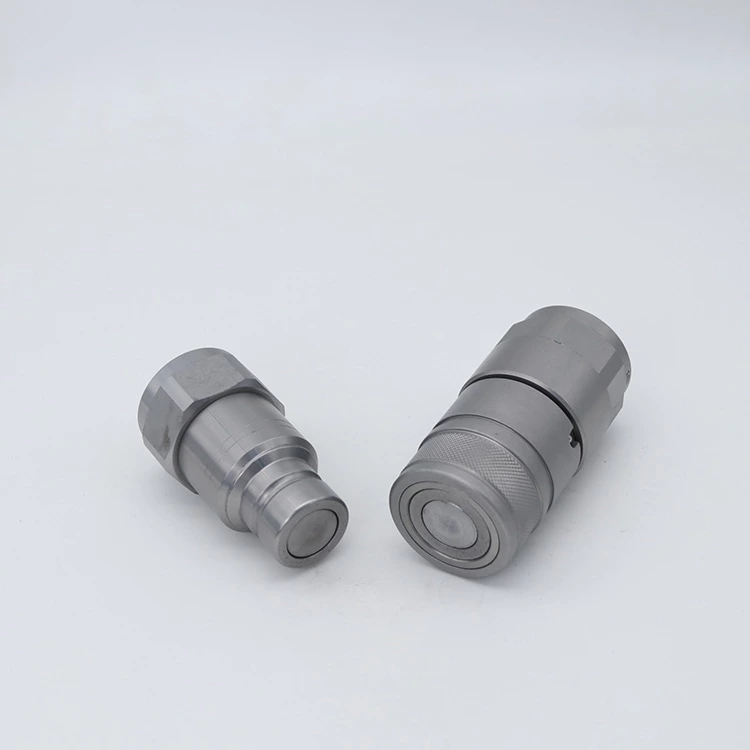
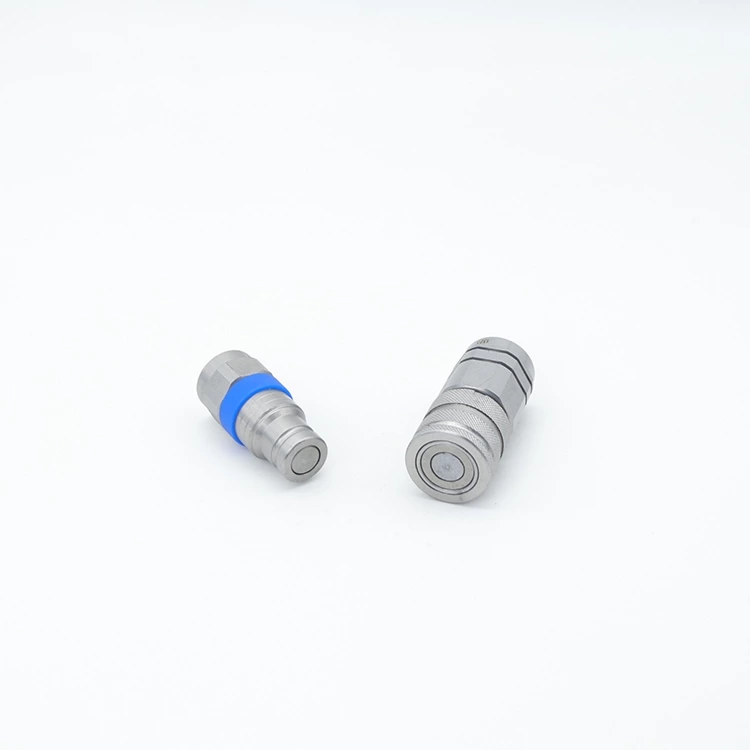
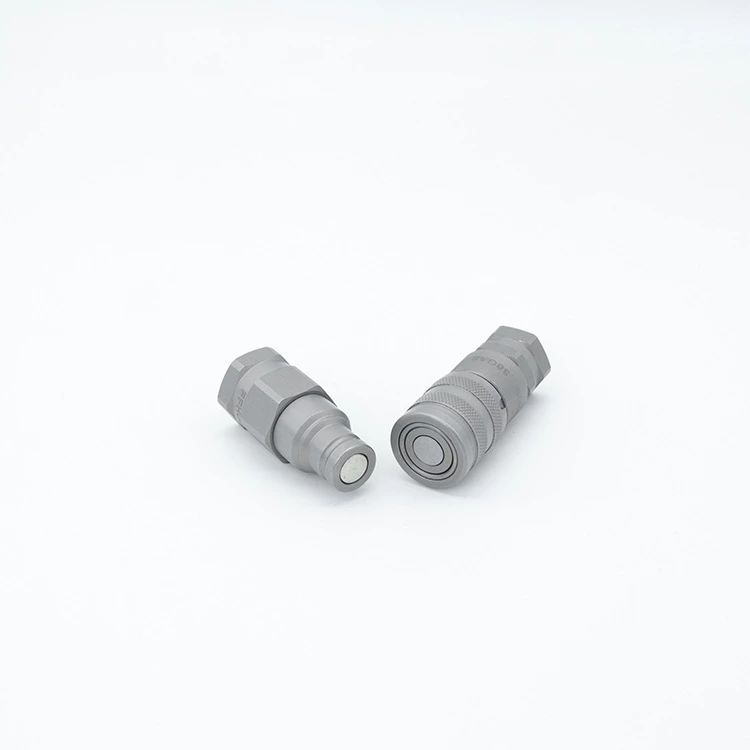
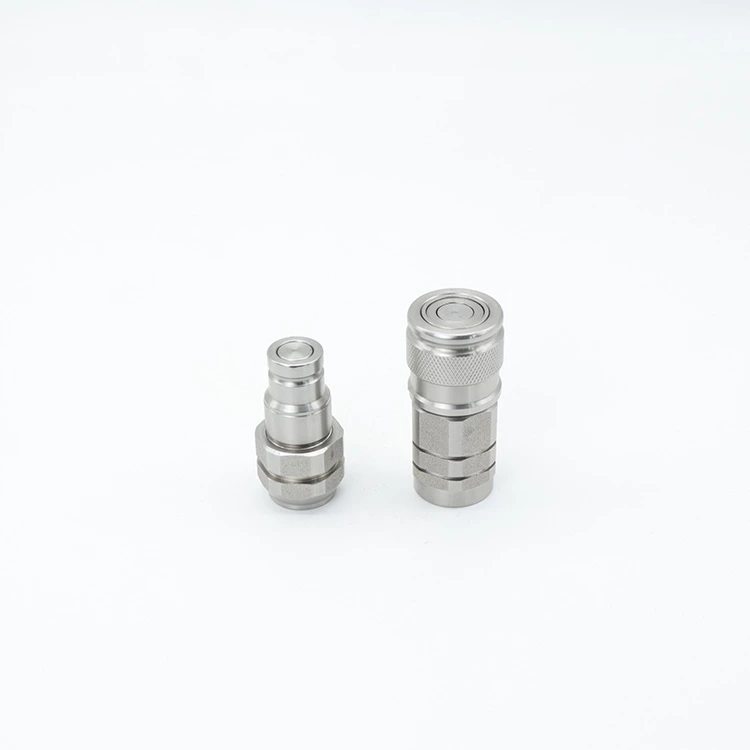
From Eco-Design to e-Fluid Power: Sustainability and Electrification Reshape Hydraulic Quick Couplings
Introduction
Two megatrends — sustainability and electrification — are quietly rewriting the specification sheet for hydraulic quick release couplings, hydraulic valves, and connectors. Beyond pressure rating and cycle life, buyers now evaluate seal compatibility with bio-based fluids, the carbon footprint of the steel, and support for electrified powertrains. This article outlines four engineering frontiers defining the next generation of fluid connection.
1. Bio-Based Fluids and Seal Compatibility
Environmental rules push operators toward bio-based fluids (HEES, HETG, HEPR) in forestry, agriculture, marine, and mining. These fluids behave differently from mineral oil: HEES swells NBR seals, HETG attacks certain polyurethanes, HEPR adds thermal stress on FKM. Modern couplings therefore need seal kits validated against ISO 15380 fluid families. Suppliers publishing fluid-seal matrices win OEM approvals faster.
2. Low-Carbon Steel and Digital Product Passports
Steel dominates a coupling's embodied carbon. Forward-looking makers adopt electric-arc-furnace steel with high recycled content, hydrogen-based direct reduction, and energy-efficient CNC cells. The EU's upcoming Digital Product Passport under ESPR will require each shipped coupling to carry a traceable record of material origin, recycled content, repair history, and end-of-life steps. Building this traceability into ERP and shop-floor data early will define which suppliers own the compliance conversation.
3. Electrification and e-Fluid Connectors
Battery-electric excavators, loaders, and farm machines shrink traditional hydraulic pair counts while opening a new market for coolant quick connectors handling water-glycol, immersion-cooling fluids, and dielectric oils. These e-fluid connectors demand electrical isolation, leak-free dielectric performance, and high current-carrying capability for adjacent high-voltage cabling — a hybrid fluid-and-electrical specification that traditional ISO 7241 catalogues never addressed.
4. Lightweighting and Circular Design
Every kilogram saved on a battery-electric machine extends working hours. High-strength aluminum and titanium inserts are emerging for low-pressure lines, paired with topology-optimized steel for high-pressure paths. Modular cartridges with replaceable seal kits support repair, reuse, and end-of-life recovery — aligning with circular-economy rules while lowering field-service cost.
Feiman Position
Feiman Fluid Technology translates these trends into its quick coupling, hydraulic valve, and connector portfolio through bio-fluid-compatible seal kits, EAF-steel sourcing, and engineering support for both traditional hydraulic and next-generation e-fluid / thermal-management loops. Backed by ISO 9001:2000 quality management and globally certified export packaging, Feiman is a long-term partner for OEMs and aftermarket operators navigating the shift toward sustainable and electrified fluid power.
Feiman Fluid Technology — Port-to-Port Solutions for a Lower-Carbon, More Electric Industrial Future.