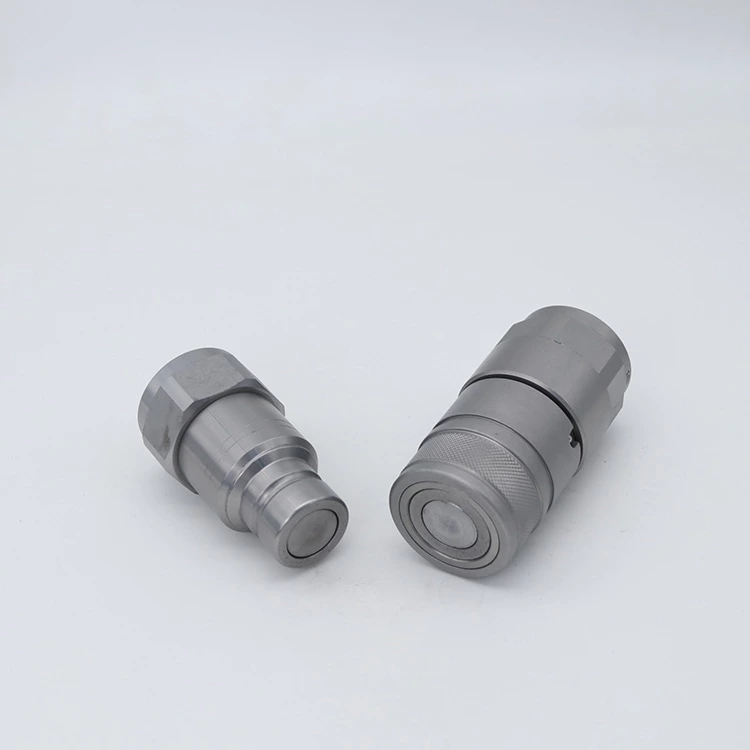
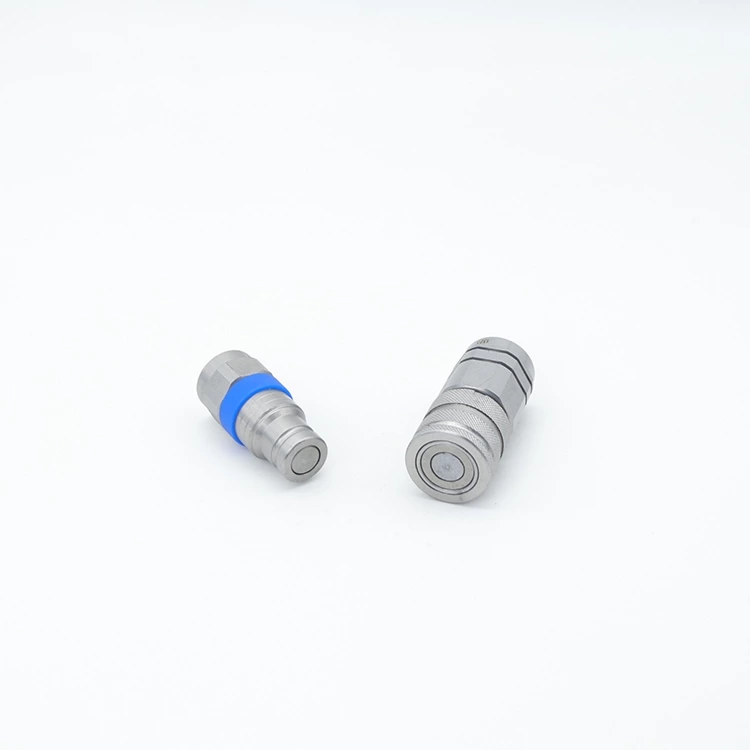
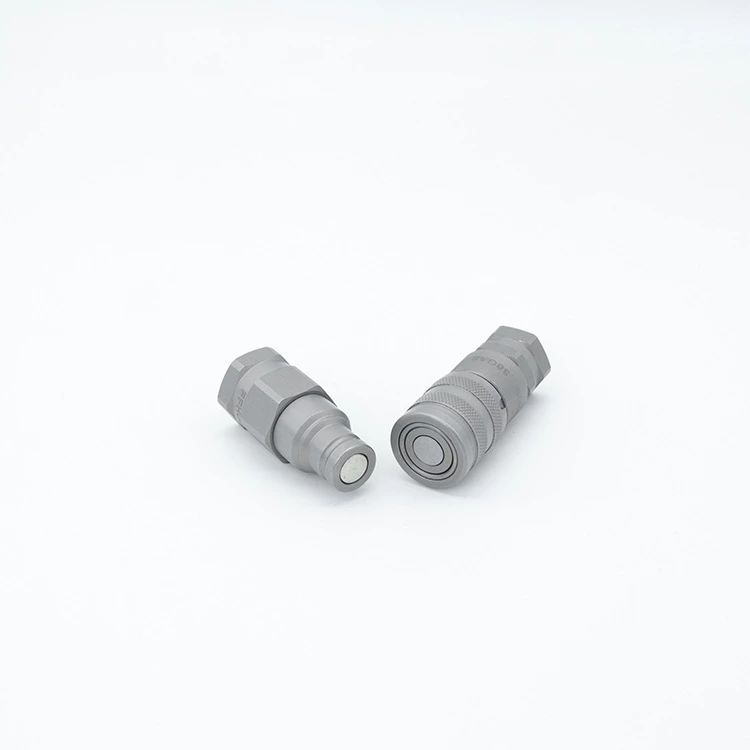
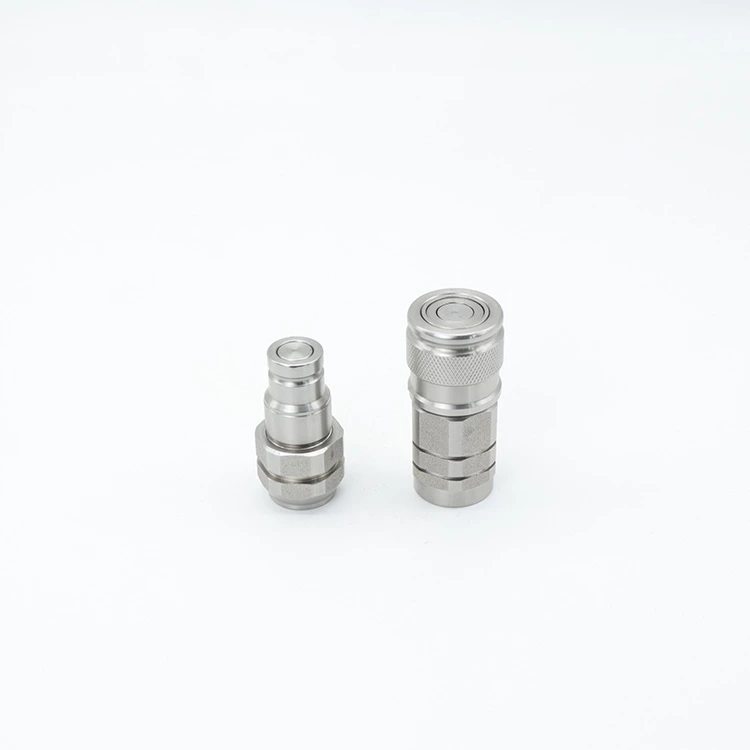
Hydraulic Quick Couplings and Valves in Renewable Energy, Clean Tech, and Precision Industries
Hydraulic Quick Couplings and Valves in Renewable Energy, Clean Tech, and Precision Industries
Published: August 4, 2026 Article Type: Product Application Keywords: Hydraulic Quick Coupling Applications, Renewable Energy Hydraulics, Wind Turbine Couplings, Data Center Liquid Cooling, Hydrogen Energy, Electric Vehicle Thermal Management, Feiman Fluid Technology
Introduction
While hydraulic quick couplings and valves are traditionally associated with construction machinery, agriculture, and mining, a quiet revolution is underway. Emerging sectors—renewable energy, clean technology, data infrastructure, and precision manufacturing—are rapidly adopting hydraulic and fluid connection technologies to solve next-generation engineering challenges.
At Feiman Fluid Technology, we monitor these emerging demand centers closely. This article explores six high-growth application domains outside traditional heavy industry, illustrating how hydraulic quick couplings and valves are becoming critical enablers of the global energy transition and digital infrastructure build-out.
1. Wind Energy: Hydraulic Pitch and Yaw Systems
1.1 The Role of Hydraulics in Wind Turbines
Modern wind turbines, especially those rated above 2 MW, rely on hydraulic systems for three critical functions:
- Pitch control: Adjusting blade angle to optimize power capture and enable emergency feathering
- Yaw braking: Holding the nacelle in position against wind direction changes
- Rotor braking: Mechanical disc brakes for maintenance and emergency stops
1.2 Quick Coupling Requirements in Wind Applications
Wind turbine hydraulic systems present unique challenges for quick couplings:
| Challenge | Specification Requirement | Feiman Solution Direction |
| High cycle fatigue | 10+ year service life, 2+ million cycles | Hardened stainless steel construction, PEEK seals |
| Corrosion resistance | Coastal and offshore salt spray exposure | 316L stainless steel or super duplex materials |
| Vibration immunity | Nacelle vibration 5–20 Hz, amplitude up to 2 mm | Thread-locked or flange-mounted designs |
| Extreme temperatures | -40°C (cold climate) to +60°C (desert) | FKM or special low-temperature seal compounds |
| Maintenance access | Tower height 80–150 m; minimize climbing | Dry-break flat face couplings for zero spillage |
1.3 Market Context
Global installed wind capacity exceeded 1,000 GW in 2025, with annual additions of 120–140 GW. Each megawatt of capacity requires approximately 15–25 hydraulic quick couplings for pitch and brake systems. This translates to a market of 1.8–3.5 million couplings annually for wind energy alone—a niche but high-value segment with stringent reliability requirements.
2. Solar Tracking Systems: Precision Hydraulics for Maximum Yield
2.1 Hydraulic vs. Electric Tracking
Utility-scale solar installations increasingly use single-axis and dual-axis tracking systems to maximize energy capture. While electric motor-driven trackers dominate the residential and commercial segments, hydraulic drive systems offer compelling advantages for utility-scale deployments:
- Higher torque density: Hydraulic cylinders deliver more force per unit weight than electric actuators
- Synchronous multi-row drive: One hydraulic power unit can drive 20–40 tracker rows simultaneously
- Better wind resistance: Hydraulic systems naturally dampen gust loads
- Lower maintenance: Fewer mechanical wear points than geared motor drives
2.2 Quick Coupling Applications
Quick couplings in solar tracking systems serve two primary purposes:
- Installation and commissioning: Connecting hydraulic power units to tracker row manifolds during field assembly
- Seasonal maintenance: Disconnecting rows for individual service without draining the entire hydraulic system
Key product requirements:
- Push-to-connect designs for rapid field installation
- UV-resistant materials for direct sunlight exposure
- Dust and sand ingress protection (IP65+ rating)
- Compatibility with biodegradable hydraulic fluids (environmental regulations in many jurisdictions)
3. Hydrogen Economy: Fluid Connections for Electrolyzers and Fuel Cells
3.1 The Hydrogen Infrastructure Challenge
The global hydrogen economy is accelerating. By 2030, installed electrolyzer capacity is projected to reach 100+ GW, up from less than 1 GW in 2022. Hydrogen fuel cell vehicles, stationary power systems, and industrial heating applications are creating entirely new fluid connection requirements.
3.2 Hydrogen-Specific Coupling Challenges
Hydrogen is the smallest molecule in existence and exhibits unique behaviors that challenge conventional sealing technology:
| Hydrogen Property | Engineering Challenge | Coupling Design Response |
| Extremely small molecular size | Permeation through conventional elastomers | Metal-to-metal seals or specialized hydrogen-compatible O-rings (HNBR, special FKM compounds) |
| Hydrogen embrittlement | Loss of ductility in high-strength steels | 316L stainless steel, titanium, or copper alloys; avoid high-carbon steels above 22 HRC |
| High flammability | Leakage creates explosion risk | Zero-leakage dry-break designs; double shut-off valves |
| Ultra-high purity requirements | Particulate and moisture contamination damages fuel cell membranes | Electropolished surfaces, particle-free assembly (ISO 14644 cleanroom) |
| High pressure (350–700 bar) | Structural integrity at extreme pressures | Forged stainless steel bodies; thread-locked or collet-locked designs |
3.3 Application Scenarios
Electrolyzer cooling loops: Proton exchange membrane (PEM) electrolyzers generate substantial heat and require precise temperature control. Quick couplings enable modular maintenance of cooling circuit heat exchangers and pumps.
Fuel cell vehicle refueling: Hydrogen dispensing noles use specialized high-pressure quick couplings rated to 700 bar with automatic locking and zero-emission disconnection.
Industrial hydrogen distribution: Steel mills, chemical plants, and refineries adopting hydrogen for process heating need robust quick couplings for temporary supply line connections during facility upgrades.
4. Data Center Liquid Cooling: The UQD Revolution
4.1 Why Liquid Cooling?
As AI training clusters deploy GPUs with thermal design power (TDP) exceeding 700W per chip, air cooling has reached its limits. Liquid cooling—direct-to-chip cold plates and immersion cooling—is becoming mandatory for high-performance data centers. The global data center liquid cooling market is projected to grow at 25%+ CAGR through 2030.
4.2 Universal Quick Disconnect (UQD) Standards
The Open Compute Project (OCP) and Open19 standards bodies have established specifications for Universal Quick Disconnects (UQDs)—standardized blind-mate couplings that enable:
- Hot-swappable server blades without draining the cooling loop
- Tool-free connection and disconnection
- Cross-vendor interoperability (Dell, HPE, Supermicro, etc.)
- Zero-drip disconnection to protect electronic equipment
4.3 Technical Specifications for Data Center UQDs
| Parameter | Typical Requirement | Notes |
| Working fluid | Deionized water, water-glycol, dielectric fluids (3M Novec, Shell EC-110) | Fluid compatibility determines seal and body material |
| Pressure rating | 5–10 bar (cooling loop) | Low pressure but high reliability requirement |
| Temperature range | 5°C to 60°C | Seal selection: EPDM for water/glycol, FKM for dielectrics |
| Flow rate | 2–15 L/min per coupling | Optimized for 1–5 kW heat removal per blade |
| Blind-mate capability | Required | Coupling must self-align and connect when server is inserted |
| Materials | Nickel-plated brass or stainless steel | Corrosion resistance to deionized water |
| Particle generation | <100 particles >5 µm per disconnection | Clean disconnection critical for filter life |
4.4 Feiman's Data Center Cooling Coupling Line
Feiman Fluid Technology has developed a series of nickel-plated brass and 316L stainless steel quick couplings specifically for liquid cooling applications. Our UQD-compatible designs feature:
- Ultra-low particle generation dry-break valves
- Color-coded keying to prevent cross-connection (red for supply, blue for return)
- Compact form factor (body length <50 mm) for dense blade configurations
- EPDM and FKM seal options for different coolant chemistries
5. Electric Vehicle Battery Thermal Management
5.1 The Thermal Challenge
Electric vehicle (EV) battery packs must maintain cell temperature within a narrow window (typically 15°C–35°C) for optimal performance, safety, and longevity. Liquid cooling loops with cold plates or cooling channels embedded in battery modules are the industry-standard solution.
5.2 Quick Coupling Applications in EVs
Quick couplings serve critical roles in EV battery thermal management:
- Battery pack assembly: Connecting cooling loops during pack manufacturing and testing
- Service and repair: Enabling coolant circuit isolation for battery module replacement
- End-of-life recycling: Safe coolant drainage and refrigerant recovery
- Thermal test rigs: Rapid connection of battery packs to environmental test equipment
5.3 Design Requirements
| Requirement | Specification | Why It Matters |
| Lightweight | <50 grams per coupling | Every gram counts for vehicle range |
| Compact | Outer diameter <20 mm | Limited space in battery pack enclosures |
| Vibration resistant | Qualified to automotive vibration standards (ISO 16750-3) | Road-induced vibration can loosen connections |
| Coolant compatible | Resistant to ethylene glycol, propylene glycol, and dielectric coolants | Material compatibility prevents seal degradation |
| Auto-shutoff | Both halves seal automatically upon disconnection | Prevents coolant spillage during service |
6. Medical Equipment and Precision Industries
6.1 Medical Hydraulics
Hydraulic and pneumatic systems power critical medical equipment:
- Surgical tables: Hydraulic positioning systems for patient orientation
- Dental chairs: Smooth, quiet height and tilt adjustment
- Patient lifts: Safe transfer of immobile patients
- Dialysis machines: Fluid connection systems for blood and dialysate circuits
- MRI-compatible tools: Non-ferrous hydraulic tools for use in strong magnetic fields
Medical applications demand exceptional cleanliness, biocompatibility, and absolute reliability. Quick couplings for medical use typically require:
- 316L stainless steel or medical-grade polymers
- FDA-compliant seal materials (USP Class VI)
- Gamma sterilization compatibility
- Lot traceability and comprehensive documentation
6.2 Laboratory and Analytical Instruments
Process analytical technology (PAT) and chromatography systems use miniature quick couplings (1/16" to 1/4") for:
- Reagent line connections
- Sample injection loops
- Column switching valves
- Waste line management
These applications require ultra-low dead volume to prevent cross-contamination and chemical resistance to aggressive solvents (acetonitrile, methanol, acids, bases).
Application Selection Guide: Matching Feiman Products to Emerging Industries
| Industry Segment | Primary Product Requirements | Recommended Feiman Product Lines |
| Wind Energy | 316L SS, high cycle life, corrosion resistance | Stainless steel quick couplings, SAE flange ball valves |
| Solar Tracking | Push-connect, UV resistant, biodegradable fluid compatible | Pneumatic quick couplings, brass hydraulic connectors |
| Hydrogen | 316L/titanium, metal seals, 700 bar rating | Custom high-pressure stainless couplings, specialized valves |
| Data Center Cooling | UQD-compatible, low particle, nickel-plated brass | Liquid cooling quick disconnect series |
| EV Battery Cooling | Lightweight, compact, vibration resistant | Miniature quick couplings, aluminum connectors |
| Medical/Lab | 316L SS, FDA seals, low dead volume | Precision miniature couplings, custom cleanroom assemblies |
Conclusion: Diversification Through Application Expertise
The hydraulic quick coupling market is no longer defined solely by construction machinery and agriculture. Renewable energy, clean technology, digital infrastructure, and precision industries are creating new demand centers with specialized requirements. Manufacturers who understand these emerging applications—and can adapt their products accordingly—will capture disproportionate value in the next decade.
Feiman Fluid Technology actively invests in application engineering for these emerging sectors. From 316L stainless steel couplings for offshore wind to nickel-plated UQD-compatible disconnects for data center liquid cooling, we are expanding our portfolio to meet the evolving needs of the global energy transition and digital economy.
For application-specific product recommendations, custom engineering support, or sample requests for emerging industry projects, contact the Feiman technical team.
About Feiman Fluid Technology
Hebei Feiman Machinery Parts Co., Ltd. was established in 2014 and is located in the Rubber and Plastic Pipe Industry Base, Jingxian, Hengshui, Hebei Province, China. It is a professional manufacturer focused on hydraulic and fluid power system solutions. The company's product portfolio includes quick release couplings, hydraulic valves, hydraulic connectors, pipe clamps, and pressure test equipment, serving construction machinery, petrochemicals, metallurgy and mining, agricultural machinery, marine engineering, and new energy equipment industries globally.
Contact:
- Tel: +86 15369362101
- Website: www.feimanfluid.com
Copyright belongs to Hebei Feiman Mac