Frontier Development Trends of Hydraulic Quick Couplings and Valves: Six Major Technology Trends Reshaping the Future of Fluid Connections
Introduction
The hydraulic quick coupling and valve industry is undergoing profound technological change. Driven by trends in intelligence, electrification, environmental protection, and new energy applications, traditional hydraulic components are evolving toward higher performance, smarter functionality, and greater sustainability.
1. Intelligence and IoT Integration
The most transformative trend is the integration of intelligence and IoT technology into hydraulic quick couplings and valves. Traditional hydraulic components are passive mechanical parts; the new generation of smart hydraulic components can actively monitor, collect data, and communicate with control systems.
1.1 Embedded Sensing Technology
New-generation smart quick couplings integrate miniature MEMS sensors that can monitor in real time:
- Connection status: Confirm proper connection and locking status
- Pressure data: Real-time system pressure monitoring and peak recording
- Temperature changes: Monitor hydraulic oil temperature and ambient temperature
- Flow information: Calculate flow rate and cumulative flow through pressure differential
- Connection count: Record number of connection cycles for maintenance planning
These data points enable predictive maintenance, fault diagnosis, and system optimization, fundamentally changing the management approach of hydraulic systems.
1.2 RFID/NFC Identification
RFID and NFC technology is being applied to hydraulic quick couplings for automatic identification:
- Automatic identification of coupling model, specifications, and parameters
- Recording production batch, factory date, and maintenance history
- Preventing incorrect connections and mismatched components
- Enabling automated inventory and asset management
1.3 AI-Driven Predictive Maintenance
Combining sensor data with AI algorithms enables predictive maintenance of hydraulic systems:
- Early warning of seal degradation 14-30 days before failure
- Reducing unplanned downtime by 40-60%
- Optimizing maintenance schedules based on actual usage
- Extending component service life through data-driven insights
2. Electro-Hydraulic Integration and Energy Efficiency
The deep integration of electrical and hydraulic technologies is another major trend. As industrial equipment becomes more electrified and intelligent, hydraulic systems are evolving toward higher efficiency and more precise control.
2.1 Deep Electro-Hydraulic Fusion
Electro-hydraulic integration technology combines the high power density of hydraulics with the precise control of electronics:
- Solenoid cartridge valves: Compact, high-response solenoid valves integrated into manifolds
- Electro-hydraulic proportional control: Precise flow and pressure regulation through electrical signals
- Integrated valve manifolds: Modular design integrating multiple valve functions
- Digital hydraulic valves: Next-generation valves with digital control interfaces
2.2 Energy-Saving Hydraulic Valve Technology
Energy efficiency has become a key focus of hydraulic valve development:
- Load-sensing valves: Automatically adjust output based on load demand, saving 15-25% energy
- Variable displacement pump control: Match pump output to system requirements
- Energy recovery systems: Capture and reuse energy from deceleration and lowering
- High-efficiency valve designs: Reduce pressure losses and internal leakage
2.3 Hydraulic Adaptation for New Energy Equipment
New energy equipment presents new requirements for hydraulic systems:
- Electric construction machinery requires quieter, more efficient hydraulic systems
- Wind power hydraulics need ultra-high reliability and long service life
- Hydrogen energy equipment requires special sealing and material compatibility
- Battery production equipment demands high cleanliness and precision
3. Extreme Condition Adaptation and New Material Breakthroughs
As hydraulic applications expand into more extreme environments, material technology and structural design continue to break through, enabling quick couplings and valves to operate reliably under ultra-high pressure, extreme temperatures, and highly corrosive conditions.
3.1 Ultra-High-Pressure Technology
The demand for ultra-high-pressure hydraulic systems continues to grow:
- Traditional industrial hydraulics: 210-350 bar
- High-pressure tools and test equipment: 700-1,000 bar
- Ultra-high-pressure applications: 1,500-4,000 bar
New designs and materials are pushing the limits of hydraulic quick couplings. The ultra-high-pressure coupling market in China reached approximately RMB 490 million in 2025, with a 5-year CAGR of 32.6%, reflecting rapid growth in high-pressure applications.
3.2 Advanced Material Systems
New materials are expanding the performance boundaries of hydraulic components:
| Material Type | Key Properties | Typical Applications |
|---|---|---|
| Super duplex stainless steel (2507) | Excellent corrosion resistance, high strength | Offshore, marine, chemical |
| Nickel-based alloy (Inconel 625) | Extreme corrosion and heat resistance | Oil & gas, chemical processing |
| Titanium alloy | High strength-to-weight ratio, corrosion resistant | Aerospace, medical |
| Carbon fiber reinforced polymer | Ultra-lightweight, high strength | Aerospace, portable equipment |
| PEEK / PVDF engineering plastics | Chemical resistance, lightweight | Semiconductor, chemical |
| Nanocoatings | Enhanced wear and corrosion resistance | Various industrial applications |
3.3 Frontier Sealing Technology
Sealing technology is critical for coupling performance and reliability:
- FKM (fluororubber): Domestic production rate in China has reached 52%, significantly reducing costs
- FFKM (perfluoroelastomer): Still 90% import-dependent in China, but domestic R&D is progressing
- New seal geometries: Optimized seal profiles for lower friction and longer life
- Surface treatment: Diamond-like carbon (DLC) coatings reduce friction and improve wear resistance
4. Green Environmental Protection and Zero-Leakage Technology
Environmental protection and sustainability have become important drivers of hydraulic technology development. Zero-leakage design, bio-based hydraulic oil compatibility, and recyclable materials are becoming industry trends.
4.1 Zero-Leakage Design
Leakage prevention has become a critical design goal:
- EU industrial emission directives require leakage rates below 100 ppm
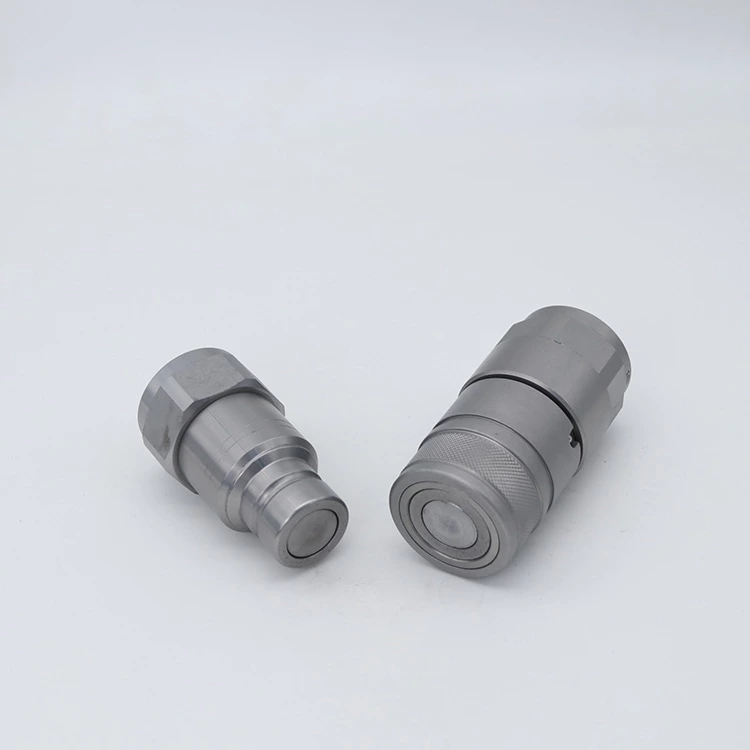
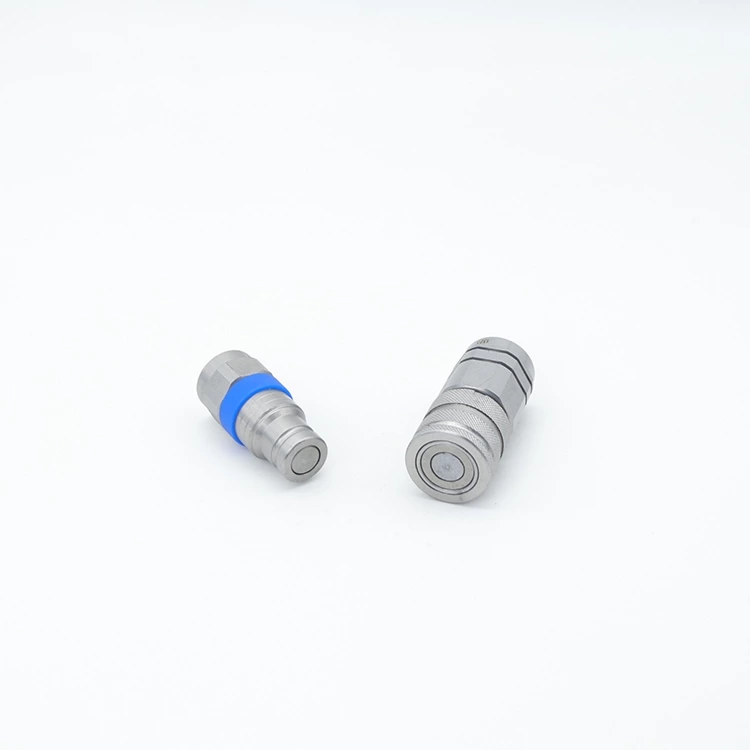
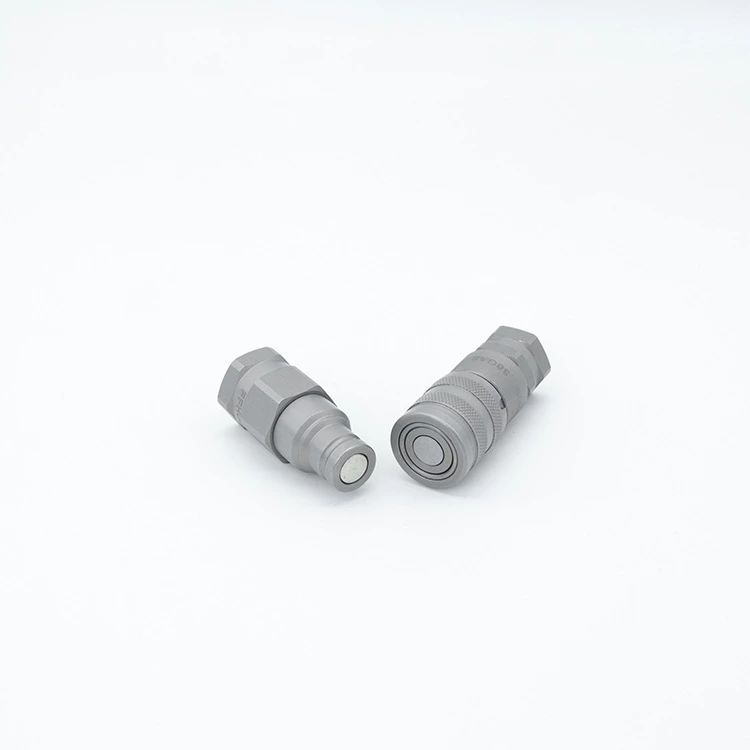
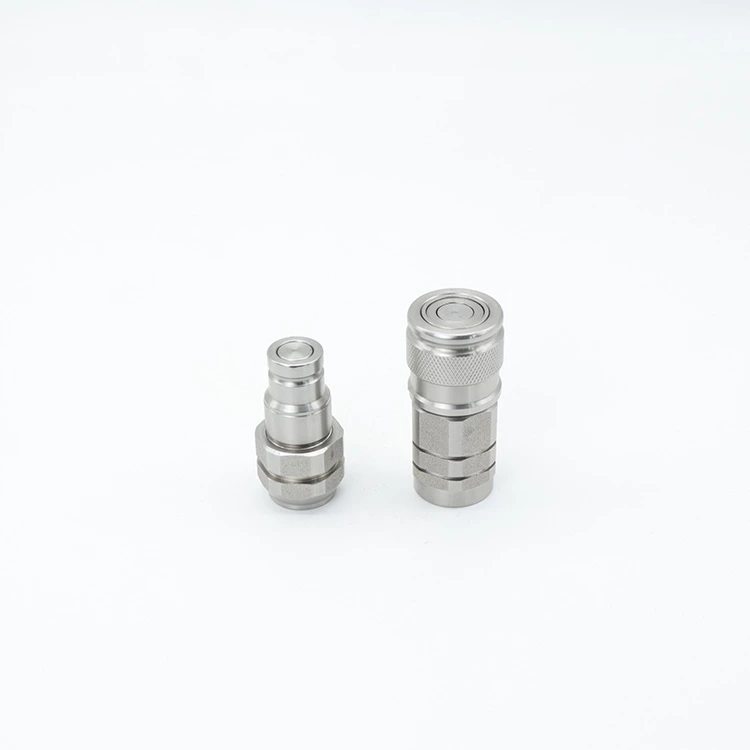
- Flat face couplings with dry break design minimize fluid loss during connection/disconnection
- Double shut-off valve designs prevent leakage from both sides
- Improved seal materials and geometries reduce internal leakage
Zero-leakage technology not only protects the environment but also reduces maintenance costs and improves system safety.
4.2 Bio-Based Hydraulic Oil Compatibility
As environmental regulations tighten, bio-based hydraulic oils are gaining adoption:
- Vegetable oil-based hydraulic fluids (HEES, HETG)
- Synthetic ester-based hydraulic fluids
- Biodegradable and environmentally friendly formulations
Quick couplings and valves must be compatible with these new fluids, requiring special seal materials and surface treatments.
4.3 Recyclable and Sustainable Design
Sustainability is influencing product design:
- Design for disassembly and recycling
- Use of recyclable materials
- Reduced material consumption through optimized design
- Longer service life reducing replacement frequency
5. Lightweighting and Miniaturization
Equipment lightweighting and compact design trends are driving hydraulic components toward smaller, lighter, and more integrated designs.
5.1 Equipment Lightweighting Wave
Lightweighting is a major trend across industries:
- Aluminum alloy couplings: Reduce weight by 40-50% compared to steel
- Composite materials: Carbon fiber and engineering plastic components
- Optimized design: Finite element analysis removes unnecessary material
- Benefits: Every 1 ton of weight reduction reduces fuel consumption by 3-5%
5.2 Compact Space Adaptation
Miniaturization is driven by compact equipment designs:
- Micro couplings in 1/8", 1/4" sizes for small equipment
- Integrated valve manifolds reducing installation space
- Close-quarter coupling designs for tight spaces
- Miniature hydraulic valves for portable equipment
5.3 Data Center Liquid Cooling
A new and rapidly growing application:
- Liquid cooling for high-performance data centers
- Quick couplings for server rack fluid connections
- OCP (Open Compute Project) standardization
- High reliability and zero-leakage requirements
Data center liquid cooling represents a significant new market opportunity for hydraulic quick coupling manufacturers.
6. Modularization and Standardization
Modular design and standardization are becoming increasingly important in the hydraulic industry, enabling faster integration, easier maintenance, and broader compatibility.
6.1 Multi-Coupling Systems
Multi-coupling systems allow simultaneous connection of multiple lines:
- Connect 2-12 hydraulic lines with a single action
- Reduce connection time by 70-80%
- Prevent cross-connection errors
- Ideal for quick-change attachments and test benches
Feiman's multi-coupling solutions are designed for construction machinery, agricultural equipment, and industrial applications where multiple hydraulic circuits need to be connected quickly and reliably.
6.2 International Standard Evolution
Standards continue to evolve to meet new requirements:
- ISO 16028: Flat face coupling standard, expanding to include new sizes and pressure ratings
- ISO 7241: General-purpose quick coupling standard, updated for new materials
- ISO 5675: Agricultural tractor standard, adapting to precision farming needs
- New standards: Emerging standards for smart hydraulics and IoT integration
6.3 Skid-Mounted Modular Design
Skid-mounted systems are gaining popularity:
- Pre-assembled hydraulic power units on skids
- Quick installation and commissioning
- Easy relocation and reconfiguration
- Reduced on-site installation time
Conclusion: Feiman Fluid Technology's Innovation Direction
The hydraulic quick coupling and valve industry is undergoing profound transformation driven by intelligence, electrification, environmental protection, and new energy applications. These six major technology trends are reshaping the future of fluid connections:
- Intelligence and IoT: From passive components to smart, data-enabled devices
- Electro-hydraulic integration: Higher efficiency and precision control
- Extreme condition materials: New materials pushing performance boundaries
- Zero-leakage green technology: Environmental protection and sustainability
- Lightweight miniaturization: Smaller, lighter, more compact designs
- Modular standardization: Faster integration and broader compatibility
Feiman Fluid Technology is committed to staying at the forefront of these trends, continuously investing in R&D to provide customers with innovative, high-quality hydraulic connection solutions.
About Feiman Fluid Technology
Hebei Feiman Machinery Parts Co., Ltd. was established in 2014 and is located in the Rubber and Plastic Pipe Industry Base, Jingxian, Hengshui, Hebei Province, China. The company specializes in hydraulic and fluid power system solutions, including quick release couplings, hydraulic valves, hydraulic connectors, pipe clamps, and pressure test equipment. Products are exported to the USA, EU, Australia, Canada, South Africa, and Commonwealth countries.
Contact:
- Tel: +86 15369362101
- Email: director@feimanfluid.com / manager@feimanfluid.com
- Website: www.feimanfluid.com
References:
- Industry research reports on hydraulic technology trends
- ISO standards for hydraulic quick couplings
- Technical literature on smart hydraulics and IoT
Disclaimer: The technology trends and predictions in this article are based on industry analysis and research, and are for reference only. Actual development may vary.