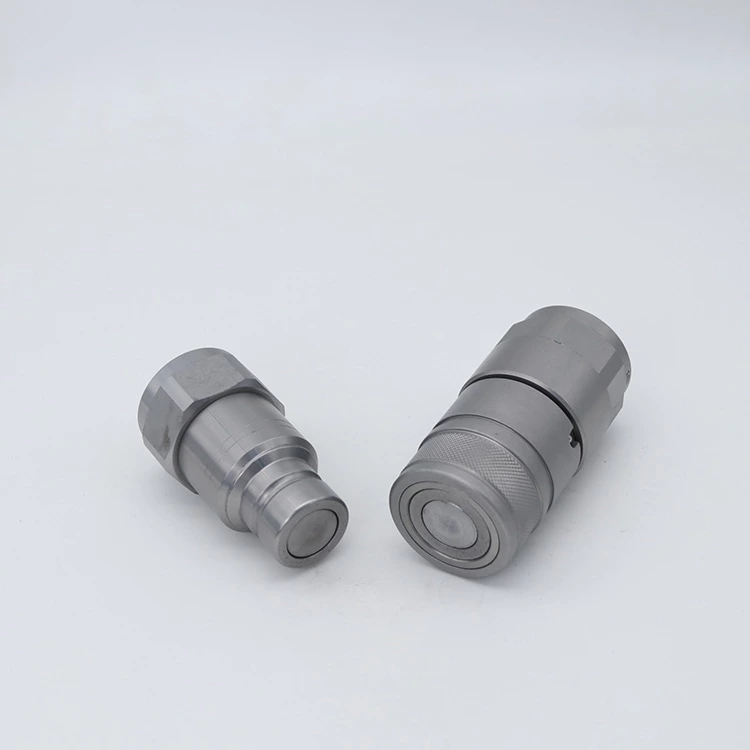
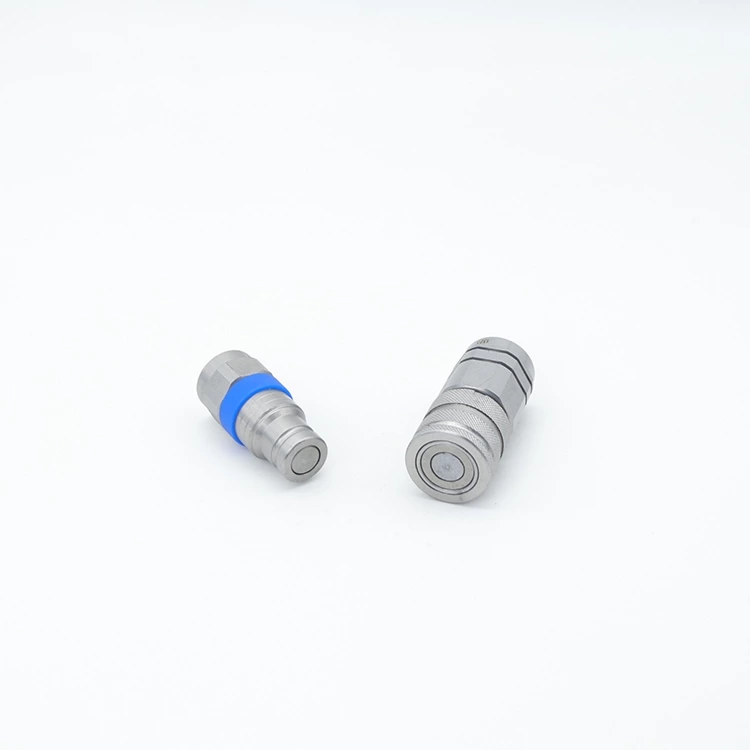
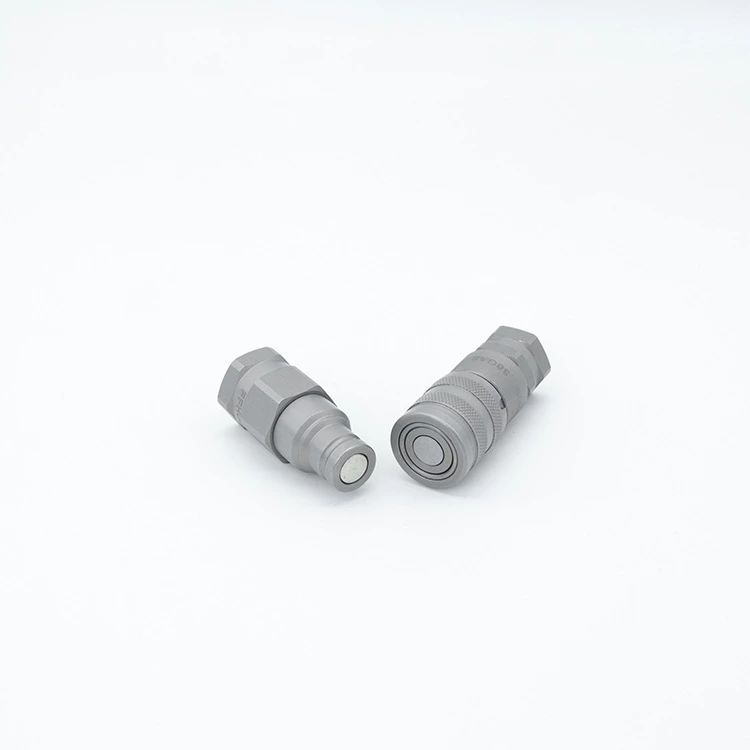
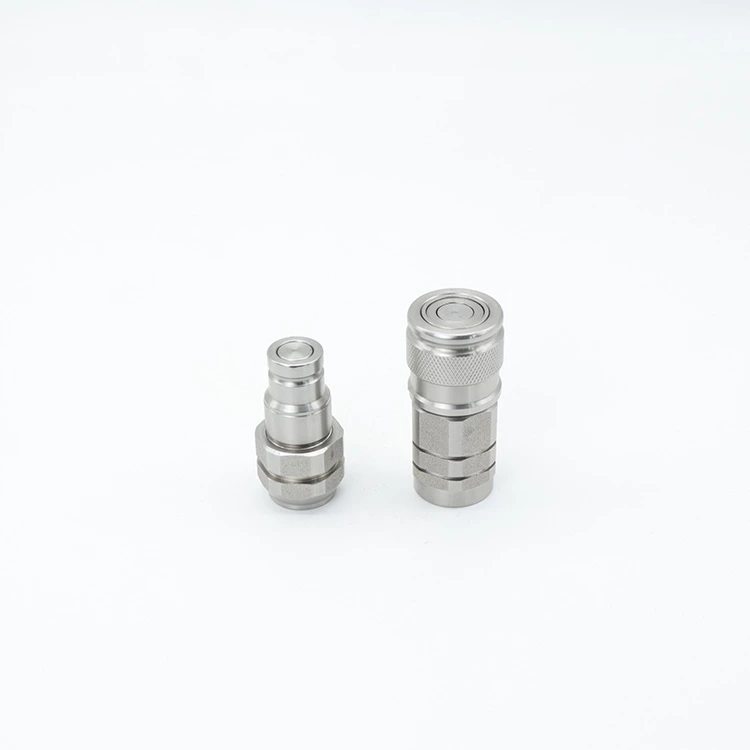
From Raw Material to Finished Coupling: The Production Process Behind Feiman Hydraulic Quick Couplings and Valves
Published: July 31, 2026
Article Type: Production Process
Keywords: hydraulic quick coupling manufacturing, hydraulic valve production, CNC machining, heat treatment, surface treatment, quality control, pressure testing
Introduction
Hydraulic quick couplings and hydraulic valves may look like simple metal parts, but their reliability depends on a tightly controlled production process. A single coupling must seal under high pressure, resist corrosion, survive repeated connect/disconnect cycles, and remain interchangeable with international standards — all while fitting into a compact space.
This article walks through the full manufacturing process at Feiman Fluid Technology, from raw material selection to final inspection and packaging. Whether you are an OEM buyer, a distributor, or a maintenance engineer, understanding this process helps you evaluate what separates a premium coupling from a commodity part.
1. Design and Engineering
Before any metal is cut, each product is designed using 3D CAD modeling and stress simulation.
Key design inputs:
- Working pressure and burst pressure requirements
- Flow rate and pressure drop targets
- Thread standard and interchangeability target (ISO 16028, ISO 7241, ISO 5675, SAE, etc.)
- Material and seal compatibility with the working medium
- Environmental conditions: temperature range, salt spray, vibration, dust
Engineers create detailed drawings and process routings, defining tolerances, surface finishes, heat treatment specifications, and inspection points for every operation.
2. Raw Material Selection and Traceability
Material choice determines pressure capacity, corrosion resistance, and service life.
| Material | Typical Grades | Applications |
|---|---|---|
| Carbon steel | 45#, 40Cr, 20# | General industrial and high-pressure hydraulic couplings |
| Alloy steel | 42CrMo, 4130 | High-strength sleeves, valves, and locking components |
| Stainless steel | 304, 316, 316L | Marine, food, pharmaceutical, hydrogen, and corrosive environments |
| Brass | H59, H62 | Pneumatic, water, and low-pressure fluid systems |
At Feiman, raw materials are sourced with mill certificates, and heat/lot numbers are tracked through the shop floor. This traceability is essential for OEM customers and quality audits.
3. Blanking and Pre-forming
Long steel or brass bars are fed into automatic bar feeders or CNC sawing machines to produce blanks of the correct length. For high-volume parts, cold forging or precision forging is used to:
- Increase material density and grain flow
- Reduce machining allowance
- Improve mechanical strength in critical areas
Forging is especially common for coupling bodies, sleeves, and valve components that will see high mechanical stress.
4. Precision CNC Machining
This is the core of coupling manufacturing. Multi-axis CNC lathes and machining centers shape the male and female halves of each coupling.
Typical machining operations:
- CNC turning: Forms the external body, sleeve, valve seat, and sealing grooves
- Drilling and boring: Creates internal fluid passages
- Milling: Machines flats, locating slots, and multi-coupling alignment features
- Tapping and threading: Cuts BSP, NPT, Metric, SAE, JIC, or custom threads
- Precision grinding: Achieves tight tolerances on sealing surfaces and valve seats
Dimensional tolerances are often held to ±0.01 mm or tighter on sealing diameters, while thread accuracy is checked with thread gauges and ring gauges. Concentricity and surface finish are critical for leak-free performance.
5. Heat Treatment
Heat treatment gives the metal the right balance of hardness, strength, and toughness.
| Process | Purpose | Typical Application |
|---|---|---|
| Quenching and tempering | Increase core hardness and fatigue resistance | Valve bodies, sleeves, high-pressure parts |
| Induction hardening | Harden wear surfaces such as locking balls and grooves | Locking mechanisms, threaded nipples |
| Carburizing | Harden surface while keeping core tough | Parts requiring wear resistance under impact |
| Vacuum heat treatment | Prevent oxidation and maintain clean surfaces | Stainless steel and precision components |
After heat treatment, parts are cleaned and hardness is verified on a sampling basis.
6. Surface Treatment and Coating
Surface treatment protects against corrosion and improves appearance. The choice depends on material and end-use environment.
| Treatment | Typical Thickness | Properties |
|---|---|---|
| Zinc plating | 8–15 µm | Cost-effective corrosion protection for carbon steel |
| Zinc-nickel plating | 8–12 µm | Higher corrosion resistance, often 500–1,000 hours salt spray |
| Chrome plating | 10–25 µm | Hard, wear-resistant surface |
| Passivation | Thin film | Restores and enhances stainless steel corrosion resistance |
| Electrophoretic coating (E-coat) | 15–25 µm | Uniform coverage, environmentally friendly |
| PTFE coating | 10–30 µm | Low friction, chemical resistance |
Feiman selects surface treatments based on customer specifications and target export markets. For marine and offshore applications, zinc-nickel or 316 stainless steel is typically specified.
7. Seal and Spring Preparation
Seals are the heart of a coupling's leak-free performance. Common seal materials include:
- NBR (Nitrile): General hydraulic oil, -20°C to +100°C
- FKM (Viton®): High temperature, aggressive fluids, -15°C to +200°C
- EPDM: Water, steam, phosphate ester fluids
- PTFE: Chemical resistance, low friction
- HNBR: Enhanced oil and temperature resistance
Seals and springs are inspected for dimensions, hardness, and material batch consistency before assembly. Critical applications may require seals from certified suppliers with full traceability.
8. Clean Assembly
Assembly is performed in a controlled environment to prevent contamination. Depending on volume and complexity, assembly may be manual, semi-automatic, or fully automated.
Typical assembly sequence:
- Install the valve core and spring into the body
- Insert O-rings and backup rings into grooves
- Load locking balls and retaining rings (for push-pull couplings)
- Attach the sleeve and verify smooth operation
- Apply assembly lubricant compatible with the working medium
- Perform connect/disconnect function check
Torque-controlled tools ensure consistent tightening. Mistake-proofing fixtures prevent missing components such as O-rings or balls.
9. Testing and Quality Control
Every Feiman coupling undergoes pressure testing before shipment. Quality control covers dimensional, functional, and cosmetic checks.
| Test | Purpose | Method / Standard |
|---|---|---|
| Dimensional inspection | Verify body size, thread accuracy, and seal groove dimensions | Calipers, micrometers, thread gauges, CMM |
| Pressure test | Confirm no leakage at rated and burst pressures | Hydrostatic / pneumatic pressure test bench |
| Leak test | Detect micro-leaks under working pressure | Air-under-water or helium mass spectrometry for critical parts |
| Connect/disconnect cycle test | Validate durability and locking reliability | Automated cycle rig, typically thousands of cycles |
| Burst test | Verify safety margin above rated pressure | Hydrostatic burst to destruction per ISO 7241 / ISO 16028 |
| Salt spray test | Validate corrosion resistance | Neutral salt spray per ASTM B117 or ISO 9227 |
| Flow and pressure drop test | Confirm hydraulic performance | Calibrated flow loop |
| Visual inspection | Detect scratches, plating defects, contamination | Manual or machine vision |
Feiman maintains a 100% factory testing policy for pressure integrity. Test data is recorded and retained by batch for traceability.
10. Marking, Packaging, and Logistics
After passing inspection, products are marked with model numbers, thread specifications, batch codes, and sometimes customer logos. Packaging is selected to protect threads, sealing surfaces, and coatings during international transport.
Standard packaging practices:
- Anti-rust oil or VCI film for carbon steel parts
- Thread protectors and dust caps
- Individual plastic bags or blister packs
- Inner cartons and export-grade outer cartons or pallets
- Barcode or QR code labels for traceability
For OEM customers, Feiman can provide custom kits, branded boxes, and pre-assembled hose assemblies.
11. Production Process for Hydraulic Valves
Hydraulic valves follow a similar manufacturing flow with additional emphasis on internal sealing and actuation precision.
Key differences:
- Body machining: Valve bodies require precise porting, spool bores, and seat angles. Multi-axis CNC machining centers are used.
- Spool grinding: Spool valves are ground to micrometer-level tolerances to minimize internal leakage.
- Seat lapping: Ball valves and needle valves receive lapped seats to ensure bubble-tight shutoff.
- Actuator assembly: Solenoid, manual, or pilot-operated actuators are assembled and calibrated.
- Performance testing: Each valve is tested for cracking pressure, flow capacity, internal leakage, and response time.
12. Continuous Improvement and Digitalization
Feiman is investing in manufacturing upgrades to improve consistency and responsiveness:
- MES (Manufacturing Execution System) for real-time production and quality tracking
- CNC automation with robotic loading for stable output
- Vision inspection for surface defects and missing components
- Digital work instructions to reduce setup errors
- Preventive maintenance programs to keep test equipment and machine tools calibrated
These improvements help reduce lead times, improve first-pass yield, and support larger OEM volumes.
Conclusion
A reliable hydraulic quick coupling is the result of dozens of controlled manufacturing steps — material selection, precision machining, heat treatment, surface finishing, clean assembly, and rigorous testing. Cutting corners at any stage increases the risk of leakage, premature wear, or field failure.
At Feiman Fluid Technology, every coupling and valve is produced under an ISO 9001:2000 quality management system with 100% pressure testing and full batch traceability. Whether you need standard ISO interchangeable parts or custom high-pressure solutions, the production process is designed to deliver consistent quality for global export markets.
For factory audit requests, material certifications, or sample evaluations, please contact the Feiman team.
About Feiman Fluid Technology
Hebei Feiman Machinery Parts Co., Ltd. was established in 2014 and is located in the Rubber and Plastic Pipe Industry Base, Jingxian, Hengshui, Hebei Province, China. The company specializes in hydraulic and fluid power system solutions, including quick release couplings, hydraulic valves, hydraulic connectors, pipe clamps, and pressure test equipment. Products are exported to the USA, EU, Australia, Canada, South Africa, and Commonwealth countries.
Contact:
- Tel: +86 15369362101
- Email: director@feimanfluid.com / manager@feimanfluid.com
- Website: www.feimanfluid.com
Copyright belongs to Hebei Feiman Machinery Parts Co., Ltd. Please indicate the source when reproducing.