CNC Precision Machining and Heat Treatment: Core Process Control for Hydraulic Quick Couplings
CNC Precision Machining and Heat Treatment: Core Process Control for Hydraulic Quick Couplings
Published: August 14, 2026
Article Type: Production Process
Keywords: CNC Machining, Heat Treatment, Hydraulic Quick Coupling, Production Process, Surface Treatment, Dimensional Control, Feiman Fluid Technology
Introduction
After raw material arrives at the factory, two processes largely determine whether a hydraulic quick coupling will survive years of pressure cycles and field abuse: precision machining and heat treatment. This article explains how Feiman controls these critical steps to produce couplings that meet ISO standards and OEM specifications.
1. Raw Material Preparation
Production begins with certified carbon steel, stainless steel, or brass bar stock. Each batch arrives with a mill certificate confirming chemical composition and mechanical properties. Bars are cut to length, and blanks are deburred before machining. Heat and lot numbers follow every blank through the factory, ensuring full traceability.
2. CNC Precision Machining
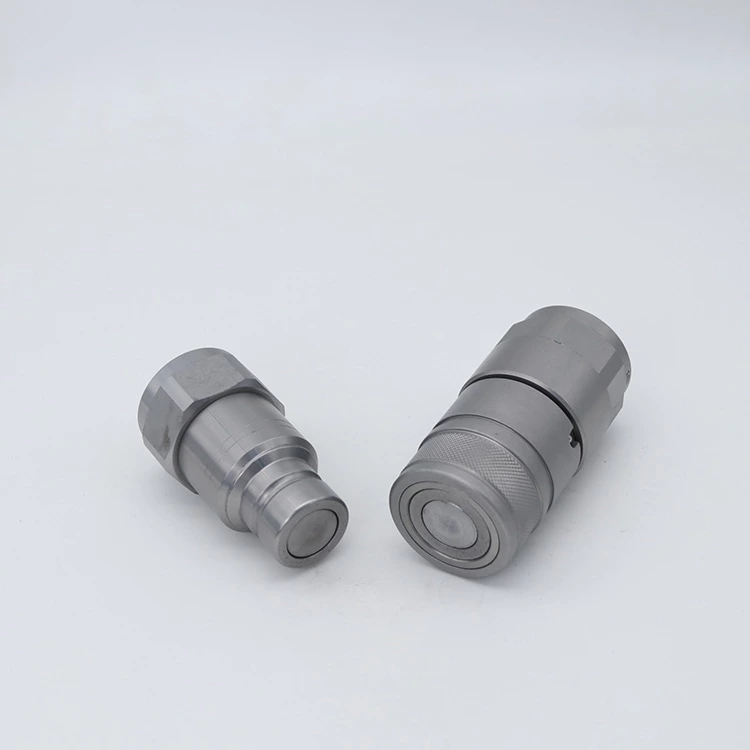
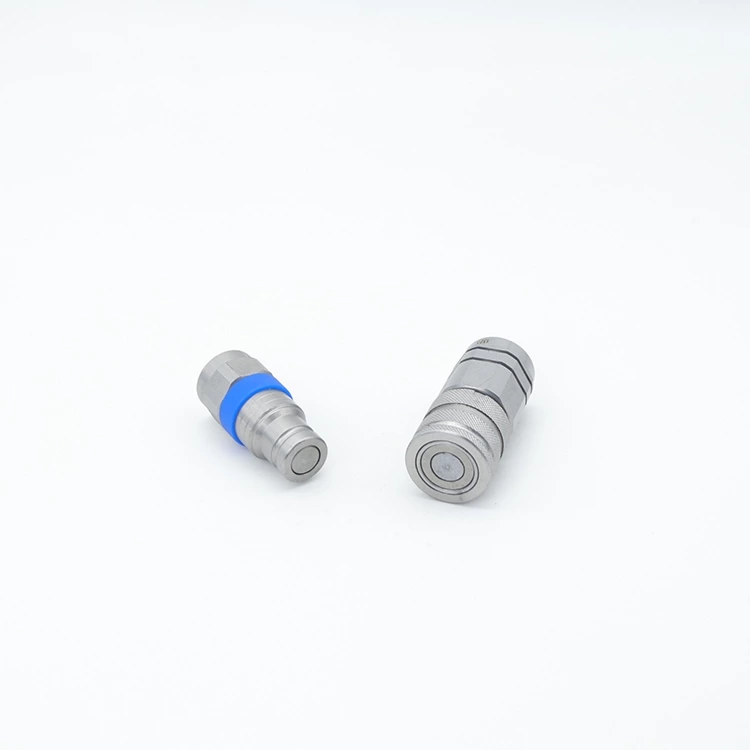
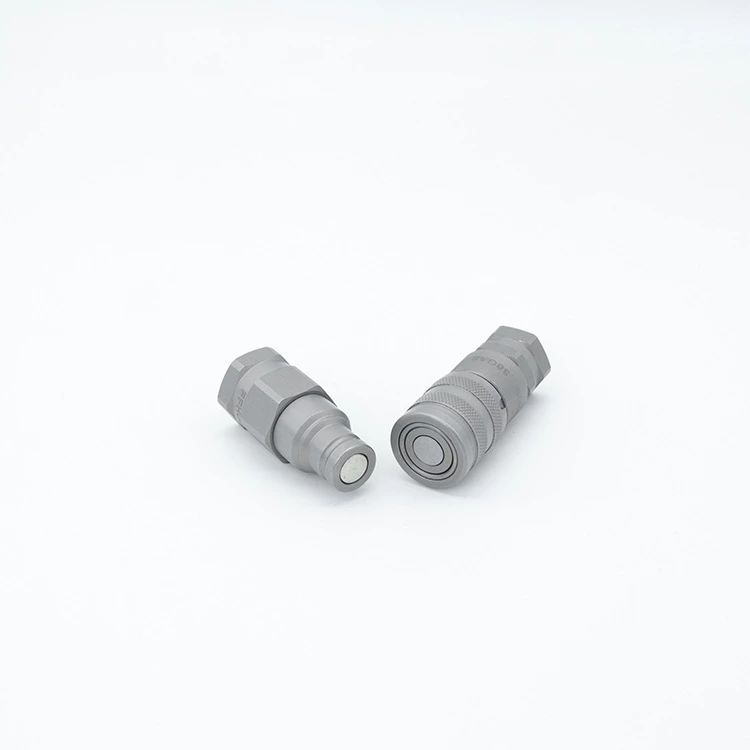
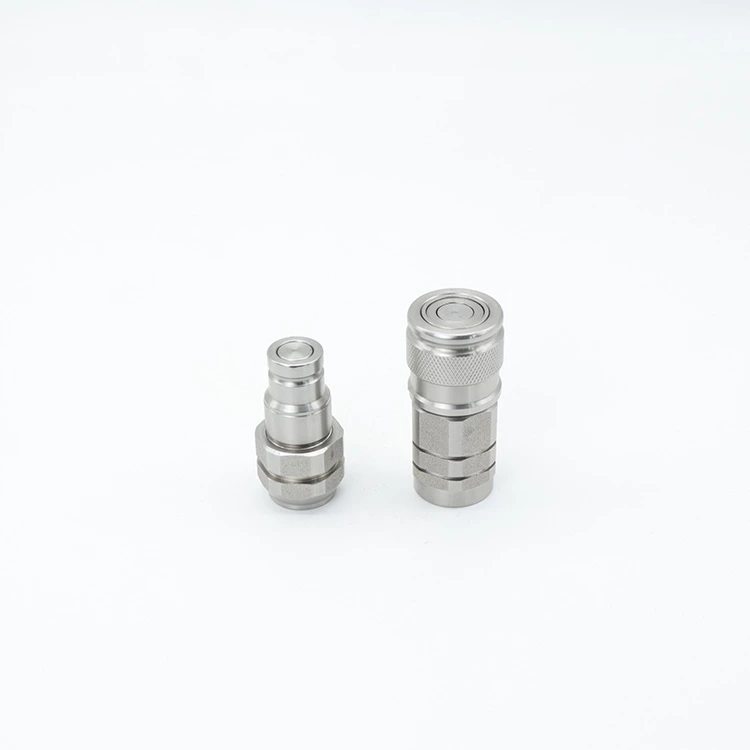
CNC turning centers shape the coupling body, valve poppet, sleeve, and locking components. Critical features include sealing diameters, thread forms, ball grooves, and valve-seat angles. Tolerances are typically held to ±0.01 mm on sealing surfaces, with surface roughness Ra ≤ 0.8 µm to prevent leakage. Threads are checked with GO/NO-GO gauges, and first-article inspections verify every dimension before batch production begins.
3. Heat Treatment
Heat treatment transforms machined steel into a durable, wear-resistant component. Carbon steel couplings are quenched and tempered to achieve the required hardness and toughness balance. Typical targets range from 28 to 40 HRC depending on the part function. Controlled atmosphere furnaces prevent oxidation and decarburization, preserving surface integrity. After heat treatment, hardness tests confirm every batch meets specification.
4. Surface Treatment
Surface protection determines corrosion resistance in outdoor, marine, and mining environments. Common treatments include zinc plating, zinc-nickel plating, and passivation for stainless steel. Salt spray testing validates performance, with zinc-nickel coatings providing 500–1,000 hours of protection. Proper surface preparation before plating is essential to avoid flaking and premature rust.
5. Dimensional Verification
Before assembly, key dimensions are rechecked using calipers, micrometers, thread gauges, and coordinate measuring machines. Concentricity, sealing diameter, thread pitch, and surface finish are verified against control plans. Only parts that pass all dimensional checks move to assembly and final pressure testing.
Conclusion
Precision machining and heat treatment are the foundation of coupling reliability. At Feiman Fluid Technology, these processes are controlled through documented work instructions, SPC monitoring, and full traceability. Combined with 100% pressure testing and ISO 9001:2000 quality management, they ensure every coupling performs consistently in the field.
For technical questions, material specifications, or factory audit requests, please contact the Feiman team.
Contact:
Tel: +86 15369362101
Email: director@feimanfluid.com / manager@feimanfluid.com
Website: www.feimanfluid.com
Copyright belongs to Hebei Feiman Machinery Parts Co., Ltd. Please indicate the source when reproducing.